

Trifexis® (spinosad + milbemycin oxime) for Dogs
Trifexis® is a beef-flavored tablet that kills fleas and prevents flea infestations, prevents heartworm disease, and treats and controls adult hookworm, roundworm and whipworm infections.
Why choose Trifexis® for your dog?

Kills fleas on dogs and prevents infestations

Prevents heartworm disease in dogs

Treats and controls hookworm, roundworm and whipworm infections
Give parasites in dogs a one-two punch


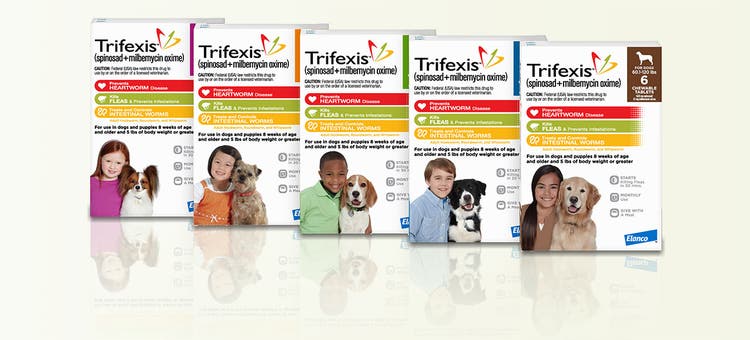

Fleas, heartworm disease, hookworms, roundworms and whipworms

Dogs and puppies 8 weeks and older and 5 pounds or greater

Easy-to-administer beef-flavored tablet

Monthly

Ready to protect your dog from heartworm disease, intestinal worms and fleas?


Trifexis, Elanco and the diagonal bar logo are trademarks of Elanco or its affiliates.
Indications
Trifexis prevents heartworm disease. Trifexis kills fleas and prevents flea infestations, and treats and controls adult hookworm, roundworm and whipworm infections in dogs and puppies 8 weeks and older and 5 pounds or more.
Important Safety Information
The use of ivermectin at higher than FDA-approved doses at the same time as Trifexis can result in serious side effects. Treatment with fewer than three monthly doses after the last exposure to mosquitoes may not provide complete heartworm prevention. Prior to administration of Trifexis, dogs should be tested for existing heartworm infection. Use with caution in breeding females. The safe use of Trifexis in breeding males has not been evaluated. Use with caution in dogs with pre-existing epilepsy. The most common adverse reactions reported are vomiting, decreased activity, itching, decreased appetite, and diarrhea. To ensure heartworm prevention, observe your dog for one hour after administration. If vomiting occurs within an hour of administration, redose with another full dose. Puppies less than 14 weeks of age may experience a higher rate of vomiting. For complete safety information, please see Trifexis product label or ask your veterinarian.